

You push through a tough workout, feel fine the next day, and then a familiar ache creeps back into your knee, shoulder, or hip a few days later. This cycle of improvement followed by relapse is one of the most frustrating parts of staying active, and it usually means something deeper than simple soreness is at play. Understanding why joint pain keeps returning can help you break the pattern instead of just treating the symptom each time it flares up. Below are the most common reasons this happens and what you can actually do about each one.
Overloading the Same Joint Without Enough Recovery Time
One of the biggest reasons joint pain resurfaces is that the tissue around the joint never gets a real chance to rebuild before it faces stress again. Muscles recover faster than tendons and ligaments, which means you can feel ready to train while the connective tissue supporting your joint is still repairing itself. When you repeat the same movement pattern workout after workout, you compound that unfinished healing process instead of allowing it to complete.
This is especially common with runners, lifters, and anyone who trains the same muscle groups multiple days in a row. The joint itself may not be the source of the damage, but it absorbs the consequences of overworked tendons and connective structures nearby.
- Tendons can take up to twice as long as muscles to fully recover from strain
- Repetitive movements like running or pressing overhead concentrate stress on one joint area
- Training the same pattern daily prevents full tissue remodeling
- Alternating muscle groups or movement types gives joints a built-in recovery window
Skipping Proper Warmups and Mobility Work Before Training
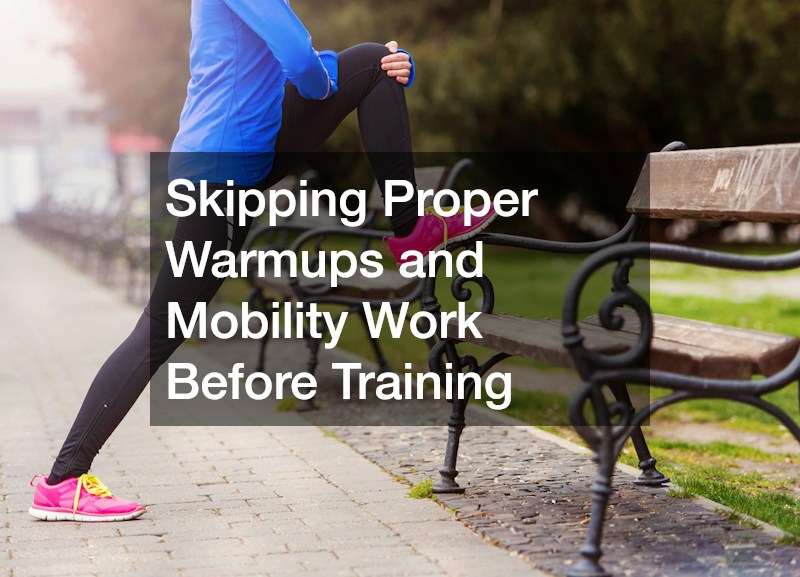
Cold, stiff joints are far more vulnerable to irritation than ones that have been properly prepared for movement. When you jump straight into heavy lifts or high-intensity cardio without warming up, the surrounding muscles are not primed to absorb force, so more stress gets transferred directly to the joint capsule and cartilage. Over time, this repeated unprepared loading can create a cycle of inflammation that returns every time you train.
Mobility work also matters because it keeps the joint moving through its full range of motion, which helps distribute load more evenly. A joint that only moves through a partial range during daily life or training tends to develop weak spots that flare up under stress.
- Dynamic stretching increases blood flow and joint lubrication before activity
- A five to ten minute warmup can meaningfully reduce injury risk
- Limited range of motion often signals an underlying mobility restriction
- Foam rolling or light cardio before lifting helps prepare connective tissue
Muscle Imbalances That Quietly Shift Stress to the Joint
Joints are designed to be stabilized by the muscles surrounding them, so when one muscle group is significantly weaker than its opposing group, the joint has to compensate. This is extremely common around the knees, where weak glutes or hip stabilizers force the knee joint to absorb rotational forces it was never meant to handle. The pain feels like it is coming from the joint, but the actual cause is often several inches away.
These imbalances build up slowly, which is why the pain seems to come out of nowhere even though you have been training consistently. Identifying and correcting the weak link is usually more effective than simply resting the painful joint, since rest alone does not fix the underlying imbalance.
- Weak hip stabilizers often contribute to recurring knee pain
- Shoulder impingement is frequently linked to weak rotator cuff muscles
- A physical therapist or trainer can assess movement patterns to find the imbalance
- Targeted strengthening often resolves pain that general rest does not
Inflammation That Never Fully Resolves Between Sessions
Every workout creates some degree of microtrauma and inflammation, which is a normal part of getting stronger. Problems arise when that inflammation does not fully settle before the next training session, creating a low-grade chronic inflammatory state in the joint. This lingering inflammation is often what people feel as a dull, nagging ache rather than a sharp injury pain.
Some people turn to cold laser therapy during this stage because it is designed to reduce inflammation at the cellular level without the downsides of long-term medication use. This approach uses low-level light wavelengths to stimulate cellular repair and improve circulation around the affected joint, which can help interrupt the cycle of chronic low-grade swelling. It is often used alongside rest and modified training rather than as a replacement for addressing the root mechanical cause.
- Chronic low-grade inflammation feels different from acute injury pain
- Ice, compression, and reduced training volume help inflammation settle naturally
- Cold laser therapy is a non-invasive option some people use to support recovery
- Persistent swelling that never fully goes down is worth mentioning to a healthcare provider
Training Through Pain Instead of Addressing Its Source
Many people treat joint pain as background noise to push through rather than a signal that something needs attention. Pushing through pain often masks the discomfort temporarily through adrenaline and endorphins during the workout, only for the pain to return once those effects wear off. This pattern can gradually worsen the underlying issue, turning a minor irritation into a more significant and harder to treat problem.
Learning to distinguish between normal training fatigue and pain that signals a developing issue is a skill worth developing. Sharp pain, swelling, or pain that worsens throughout a workout are all signs that pushing through is the wrong move.
- Dull muscle soreness is different from sharp or localized joint pain
- Pain that increases as a workout progresses usually means stop and assess
- Swelling or joint instability should never be trained through
- Modifying a workout is better than skipping recovery altogether
Recurring joint pain after workouts is rarely random, and in most cases it points to a specific, fixable cause like inadequate recovery, muscle imbalance, or unresolved inflammation. Paying closer attention to how your body responds during and after training can help you identify which of these patterns applies to you. If the pain continues despite adjusting your training and recovery habits, talking to a physical therapist or sports medicine provider is the logical next step. Addressing the root cause now will save you from a much longer recovery process down the road.
